

Condo mortgage approval in Orange County can involve two separate questions: whether the buyer qualifies for the loan and whether the condominium project fits that loan program. A solid income and asset file does not resolve missing HOA insurance, an unclear repair plan, or incomplete project documents. The reverse is also true: an eligible project does not guarantee that a particular borrower qualifies. Buyers considering a unit in Seal Beach, Huntington Beach, or elsewhere in Orange County can reduce surprises by asking about the project early and giving the lender access to current HOA records. The exact review depends on the loan type, occupancy, unit, project, lender, investor, and current program guide.
What is the difference between borrower approval and condo project approval?
Borrower approval evaluates the person and proposed loan, while project review evaluates the condominium development securing it. A lender can be comfortable with a buyer’s income, assets, credit profile, debts, and intended occupancy but still need evidence that the HOA and project meet the selected program’s rules.
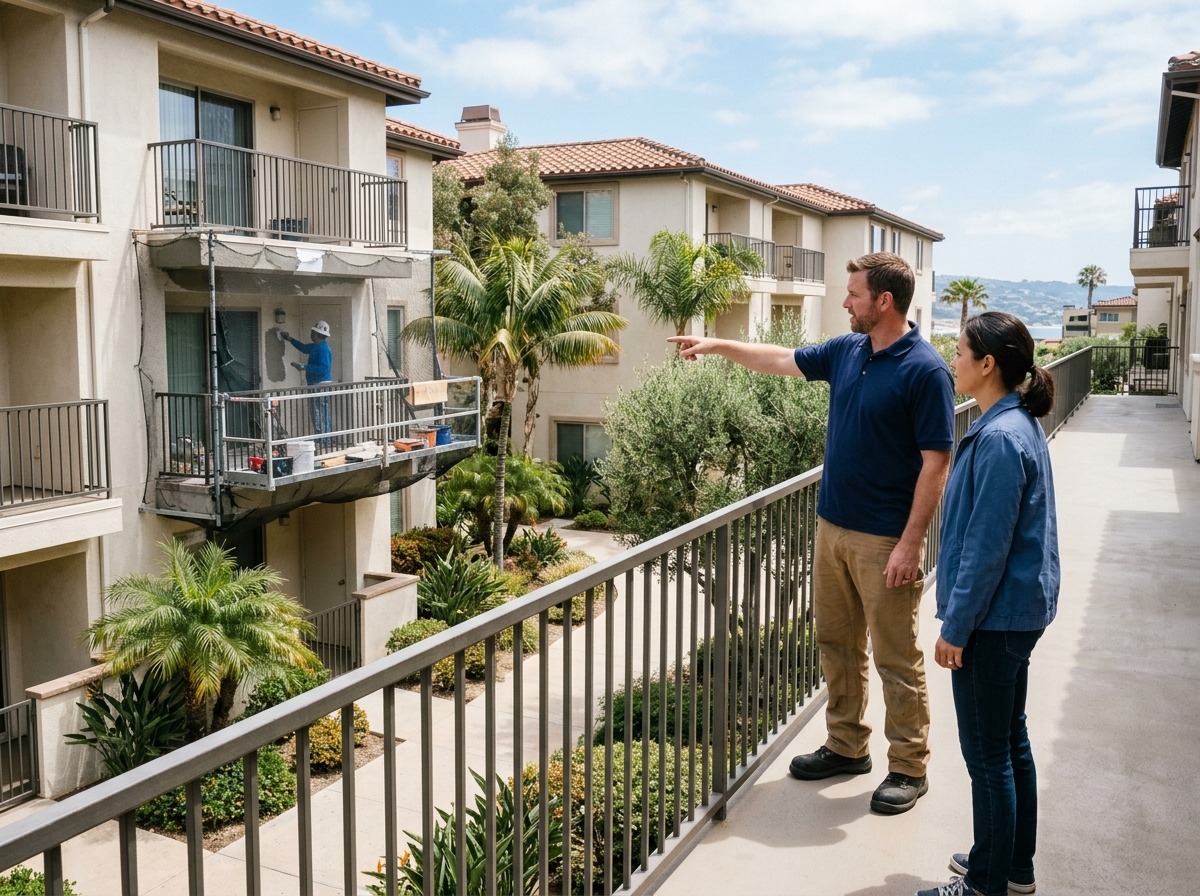
Project review can cover finances, insurance, physical condition, legal matters, ownership or occupancy patterns, commercial space, and unit rights. Fannie Mae organizes these requirements in its current Project Standards chapter, including general standards, possible waivers, full review, project approval, and special-consideration routes.
Not every condo receives the same review. Project age, intended occupancy, loan characteristics, and investor requirements can change the path. A preapproval is useful, but it is not approval of every Orange County condo. Once a buyer identifies a unit, the lender needs its project details to determine the applicable review.
Which HOA documents does a condo lender need?
A condo lender generally needs enough current documentation to answer the questions required by the applicable guide. The exact package varies, and the lender may accept information from a project database or prior review rather than request every item again.

Practical HOA and project document checklist
Ask the lender, real estate agent, seller, or HOA manager which of these items is available and who must authorize or pay for it:
- A completed lender or agency condo project questionnaire
- The declaration or CC&Rs, bylaws, articles, rules, and relevant amendments
- The current operating budget and recent financial statements
- The latest reserve study or reserve study update, if one exists
- Master property insurance evidence and applicable endorsements
- Flood, general liability, and fidelity or crime coverage information when required
- Recent HOA board meeting minutes
- Details for current or planned special assessments
- A current delinquency report for regular dues and special assessments
- Structural, mechanical, engineering, balcony, parking, or other inspection reports that have been completed
- A list of deferred maintenance, planned repairs, funding sources, contracts, and evidence of completed work
- Information about pending litigation, arbitration, mediation, or construction-defect claims
- Unit counts, sales status, owner-occupancy or rental data, and single-entity ownership information
- The amount, location, ownership, and use of any commercial or mixed-use space
For a Fannie Mae Full Review, the lender reviews project documents, enters accurate information in Condo Project Manager, and retains the certification. Fannie Mae’s Full Review guidance also says an approval message does not remove the lender’s insurance responsibilities. Current documents matter because an old package may omit a recent renewal, assessment, inspection, repair, or lawsuit.
What project issues can delay or block condo mortgage approval?
Incomplete records, insurance gaps, strained finances, unresolved repair concerns, material litigation, and conflicting project uses can require deeper review. A concern is not automatically a denial in every program, but the lender needs enough evidence to make an eligibility decision.
Insurance, budget, reserves, and delinquencies
The lender may review master property and applicable flood coverage, liability and fidelity or crime coverage, deductibles, policy terms, and the boundary between the master policy and a unit owner’s policy. Coverage must satisfy the selected program’s current requirements.
Under Fannie Mae’s current Full Review rules, lenders assess budget adequacy and generally require a replacement-reserve allocation of at least 10% of annual budgeted assessment income, subject to the guide’s calculation and qualifying reserve-study alternative. The same guidance currently limits units 60 days or more delinquent on common expenses or each special assessment to 15%. These are Full Review standards, not universal HOA health rules or thresholds for every program.
Deferred maintenance, inspections, and special assessments
Unresolved conditions affecting safety, structural integrity, habitability, financial viability, or marketability can make a project ineligible under a particular program. Fannie Mae’s current ineligible-project guidance addresses critical repairs, inspections, special assessments, and supporting documents.
A special assessment is not automatically disqualifying. The lender may need its purpose, approval status, original and remaining amount, collection schedule, and connection to any critical repair. Loan eligibility and a buyer’s contractual or legal rights are separate questions.
Litigation, owner occupancy, and commercial use
Pending litigation or pre-litigation activity needs context, including the parties, allegations, insurance response, potential exposure, and connection to safety or habitability. The lender applies the program guide. Buyers needing legal-document advice should consult their own qualified attorney.
Owner occupancy is not governed by one universal pass-or-fail percentage. Intended occupancy, project-specific restrictions, ownership concentration, rental activity, and hotel-like operation may matter. Commercial space may be compatible with a residential condo, but its amount, location, ownership, and use are reviewed. Fannie Mae’s current ineligible-project rule generally limits commercial or mixed-use allocation to 35%; FHA and other investors may apply different current standards.
How do Fannie Mae and FHA condo review paths differ?
Fannie Mae and FHA use different frameworks, so a project’s history under one does not automatically establish eligibility under the other. The lender must match the unit and transaction to the selected program’s current requirements. For the borrower side of that choice, see FHA vs. conventional for California buyers.

Fannie Mae review paths
For a Full Review, the lender evaluates applicable project requirements and generally uses Condo Project Manager to document the decision. Fannie Mae’s Full Review guidance describes statuses including Certified by Lender, Approved by Fannie Mae, Unavailable, and Guide Ineligible. Statuses may carry transaction restrictions, while the lender remains responsible for insurance and newly discovered information.
The broader Project Standards chapter also identifies possible project-review waivers, Fannie Mae approval through PERS, FHA-approved condo review eligibility, and special-consideration processes. These are not interchangeable shortcuts. The lender determines whether the file can use a waiver or existing status, or needs Full Review, PERS, or another permitted route.
FHA project approval and single-unit approval
HUD’s public FHA condominium search lets buyers and lenders look for a project by location, name, identifier, or status. The displayed status and identifying details matter.
FHA also permits Single-Unit Approval in qualifying circumstances for a unit in a project that is not currently FHA approved. HUD’s Condominiums Help page describes project approval methods, project and concentration conditions, and the lender questionnaire process. An unlisted or expired project is not automatically the end of an FHA discussion, but approval is not guaranteed. The lender must confirm current FHA policy and the eligibility of the borrower, loan, unit, and project.
What should an Orange County buyer check before making a condo offer?
A buyer should surface project-review issues before treating preapproval as project approval. The goal is not to underwrite the HOA personally. It is to give the lender enough information to flag gaps and identify a workable loan path.
Offer-period condo checklist
- Give the lender exact project details. Provide the unit address, project and HOA names, listing, intended occupancy, and HOA contact.
- Ask which review path is expected. Discuss a possible waiver, Full Review, existing approval, FHA project approval, Single-Unit Approval, or investor-specific review.
- Identify the document source. Find out who orders the questionnaire and supporting package.
- Surface known issues. Share disclosed assessments, repairs, insurance changes, litigation, inspections, rental restrictions, commercial uses, or developer control.
- Clarify responsibilities and costs. Ask who pays HOA document fees, whether updates may be required, and what remains outstanding.
- Route contract questions correctly. Financing approval belongs with the lender. Contract protections belong with the real estate agent and, when needed, a qualified attorney.
- Keep another loan route open when appropriate. Conventional, FHA, and other mortgage products do not use identical project standards. Eligibility, rules, costs, and borrower fit vary.
How can Taylor Weiner Team help with an Orange County condo purchase?
Taylor Weiner Team can help buyers frame financing questions around a specific condo instead of assuming borrower preapproval settles project review. The discussion can cover the likely loan program, needed HOA items, intended occupancy, and available documents. If one route does not fit, the team can evaluate whether another product is worth considering without promising that it will overlook a material project problem. Lender and investor rules, project eligibility, and borrower eligibility vary.
FAQ about condo mortgage approval in Orange County
Can I be preapproved before choosing a condo?
Yes. Borrower preapproval can happen before you select a property, but the condo project itself usually cannot be evaluated for your transaction until the lender has the unit and project details. Treat preapproval as an important borrower step, not approval of every HOA.
Does an HOA questionnaire guarantee condo approval?
No. The questionnaire supplies information for the review, but the lender may need budgets, insurance documents, reserve studies, minutes, inspection reports, legal documents, or explanations. Approval depends on the complete file and the applicable program rules.
Does every Orange County condo need a Fannie Mae Full Review?
No. The appropriate path depends on the project, unit, transaction, occupancy, loan characteristics, current Fannie Mae guidance, and lender findings. Some eligible transactions may use a permitted waiver or existing project status, while others require Full Review or another approval process.
Can an FHA loan work if the condo project is not on HUD’s approved list?
Possibly. FHA Single-Unit Approval may be available for an eligible unit and project that meet current requirements, but it is not automatic. An FHA-approved lender must evaluate the unit, project, concentration, questionnaire, borrower, and loan under current HUD rules.
Will a special assessment always stop a condo loan?
No. The lender needs to know what the assessment funds, how it is structured, whether payments are delinquent, and whether it relates to unresolved critical repairs. The answer depends on the selected program, the project documentation, and the lender or investor’s current rules.
Ready to review an Orange County condo?
Bring the property address and any available HOA documents to the conversation. Contact Taylor Weiner Team to discuss the borrower file, likely project-review path, and questions to raise before financing deadlines become tight. If you have a specific building in mind, Taylor Weiner, NMLS 263090 can check how its approval status affects your loan options.